




Managing Digital Transformation: Strategy to Execution


The majority of digital transformations fail due to the trouble managing digital transformation, rather than issues related to technology. According to McKinsey & Company, nearly 70% of companies’ initiatives do not achieve their desired goals and outcomes because they lack sufficient change management processes, governance frameworks, and aligned leadership.
Effective management of change has become a fundamental management skill as digital disruption speeds up; hence, companies have to do well. The real process of digital transformation management is investigated in this article.
What Managing Digital Transformation Really Means
Managing digital transformation means aligning technology, people, and processes to drive business change. Adopting fresh tools or updating programs is not all there is to it. Rather, it calls for reengineering a company’s operations, fostering innovation, and developing a culture welcoming of change. Effective digital transformation management helps businesses coordinate technology projects, people, and procedures to increase efficiency, provide more value to consumers, and foster ongoing innovation.
Management of digital transformation matters for several reasons:
– Follow developing technology and preserve long-term competitiveness.
– Faster, more customized engagements will help to raise consumer experience.
– Automate to cut operating expenses.
– Responding to market changes and new possibilities, improve organizational agility and creativity.
– By resolving problems, including integration challenges, security concerns, and operating disruptions, one reduces transformational hazards.
Why Digital Transformation Fails in Most Organizations
Many companies continue to find it difficult to get real outcomes from their transformation initiatives despite significant expenditure. The problem is not the absence of money or technology but rather the difficulty of managing digital transformation across people, procedures, and strategy.
Among the typical causes for the failure of digital transformation efforts are:
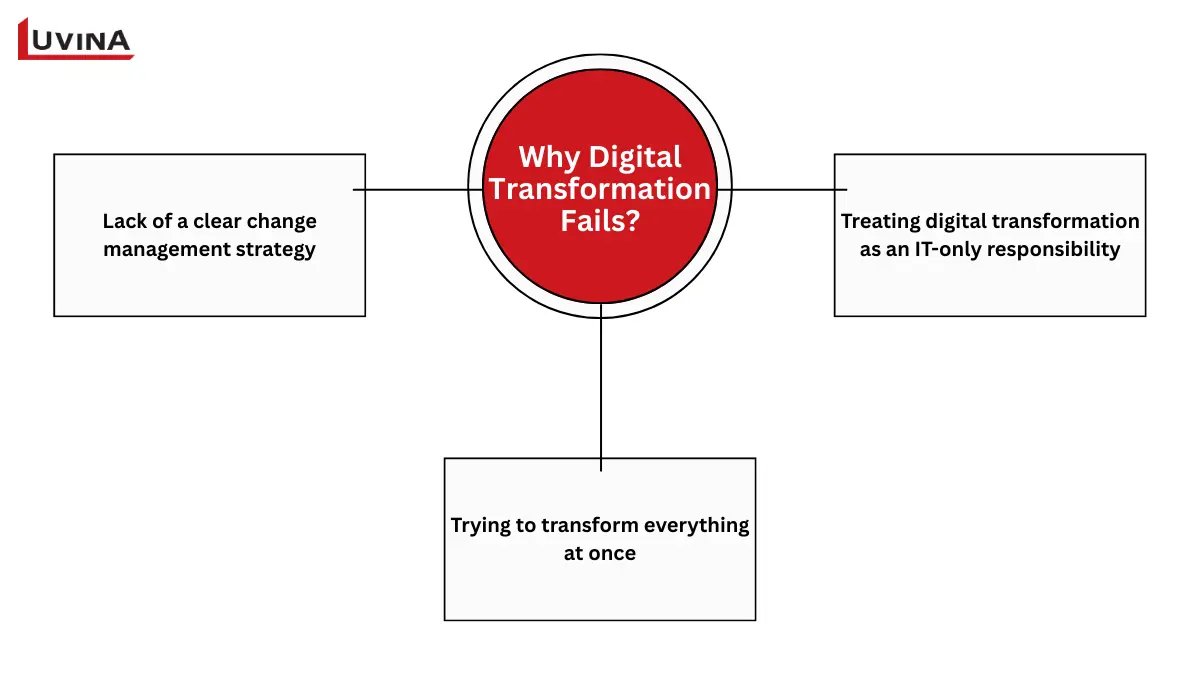
Many digital transformation projects have failed due to these reasons
Lack of a clear change management strategy
Most programs that undergo digital transformation start off by utilizing new technology, but do not include an adequate framework on how to manage the change that takes place within the organization after the new technology has been implemented. Having an effective management of digital transformation strategy ensures that the employees have a good understanding and acceptance of the new processes and tools, and will therefore support the overall success of any company’s digital transformation program.
Without a change management strategy in place, it will be difficult for teams to accept change and/or adapt to their new ways of working.
Treating digital transformation as an IT-only responsibility
Every division of the company is impacted by digital transformation. Many businesses, however, see the change as only to be under the purview of the IT division. This generates broken systems and greatly raises both the expense and difficulty of managing digital transformation.
Trying to transform everything at once
Not a one-time project, digital transformation is a long-term trip. Still, leaders sometimes feel under pressure from consumers and stakeholders to produce fast outcomes. This pressure can cause teams to start several major projects all throughout the company. Too many modifications happening at once strain resources, cloud priorities, and damage execution quality.
The 5 Core Pillars of Digital Transformation Management
Usually supported on many key pillars, good management of the digital transformation strategy guarantees that digital projects fit with business goals and allow for ongoing adaptation. Effective execution of change and sustained long-term influence depend on these pillars for businesses.
| Pillar | Description |
| Change management | Gets staff ready and helps them to embrace new systems, procedures, and responsibilities. |
| Technology selection and integration | Finds the appropriate tools and platforms and guarantees seamless connection with current systems. |
| Leadership and cultural change | Promotes a society that welcomes innovation, experimentation, and constant transformation. Managing digital transformation across teams depends on strong leadership. |
| Data management and security | Sets up guidelines for gathering, storing, and analyzing data while shielding personal information. |
| Continuous improvement and performance measurement | Tracks development using KPIs and metrics; constantly enhances digital projects. |
Table of the 5 core pillars of digital transformation management
From Strategy to Execution: The Digital Transformation Management Framework
Although many companies have bold transformation plans, they have trouble converting them into actual operational changes. The problem is with managing digital transformation. There is no one-size-fits-all plan as businesses begin from varied levels of digital readiness. Instead, most successful programs follow a similar sequence. 5 phases often employed in successful transformation projects are described in the following framework:
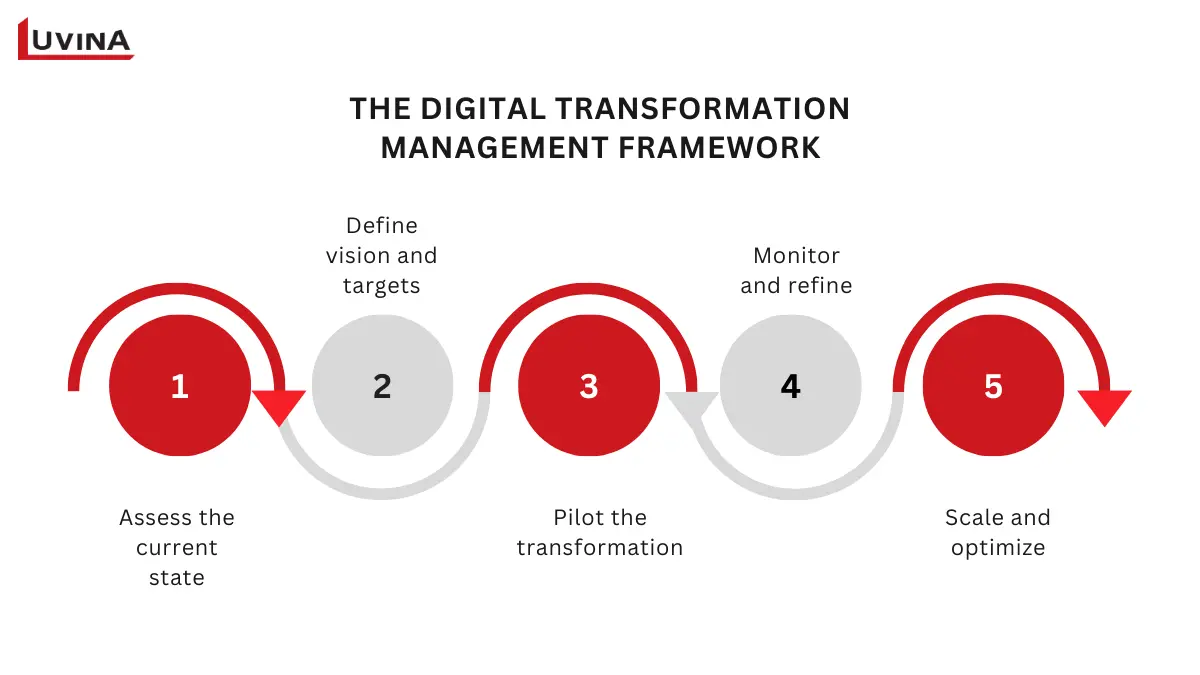
A framework for managing digital transformation
Phase 1: Assess the current state
Understanding the present position of the firm is the first step in managing digital transformation. Organizations have to assess digital maturity, spot operational pain spots, and map current procedures. Process mapping or value stream mapping, among other methods, assists one in seeing system interactions, data flows, and processes.
This phase results in a baseline evaluation and a transformation charter outlining major goals and areas for improvement.
Phase 2: Define vision and targets
Companies then convert their business plan into a straightforward digital vision. This vision should clarify how digital features will boost efficiency, customer experience, or processes.
Leaders usually identify 3 to 5 North-Star KPIs, such as decreasing operational cycle time or raising customer experience ratings, in order to render the vision trackable. Companies also shortlist technologies or artificial intelligence tools at this stage that could help to meet these aims.
Phase 3: Pilot the transformation
Usually, companies start with limited pilot initiatives rather than initiating major modifications all at once. In a limited context, a chosen workflow or procedure is revised and evaluated. Early detection of problems and improvement of the new workflow let teams guarantee that the changes actually function before more general acceptance.
Phase 4: Monitor and refine
Organizations have to keep an eye on how well new processes operate once they are implemented. Metrics like user adoption, productivity growth, and time or cost savings enable assessment of whether the change is generating intended outcomes.
Specialists closely watch activities throughout this “hyper-care” phase and quickly address problems while gathering feedback for enhancement.
Phase 5: Scale and optimize
Better workflows can be made available throughout more teams or departments when pilot results show obvious advantages. Information gathered during early phases helps to improve processes and direct more optimization.
Managing digital transformation is a continuous process in reality rather than a one-off project. Every 12 to 18 months, many companies use this approach to reassess maturity, realign priorities, and find fresh chances for innovation.
Leadership Roles in Managing Digital Transformation
Technology by itself cannot cause change. Strong leadership is also necessary for businesses to direct execution, culture, and strategy. Strong digital transformation leadership guarantees that digital projects are consistent with corporate objectives and enables staff members to adjust to changing working patterns. This orchestration requires leaders who can strike a balance between vision, strategy, and cultural change as they lead groups through doubt and ongoing innovation.
The following are the main leadership positions and skills helping companies successfully negotiate digital transformation:
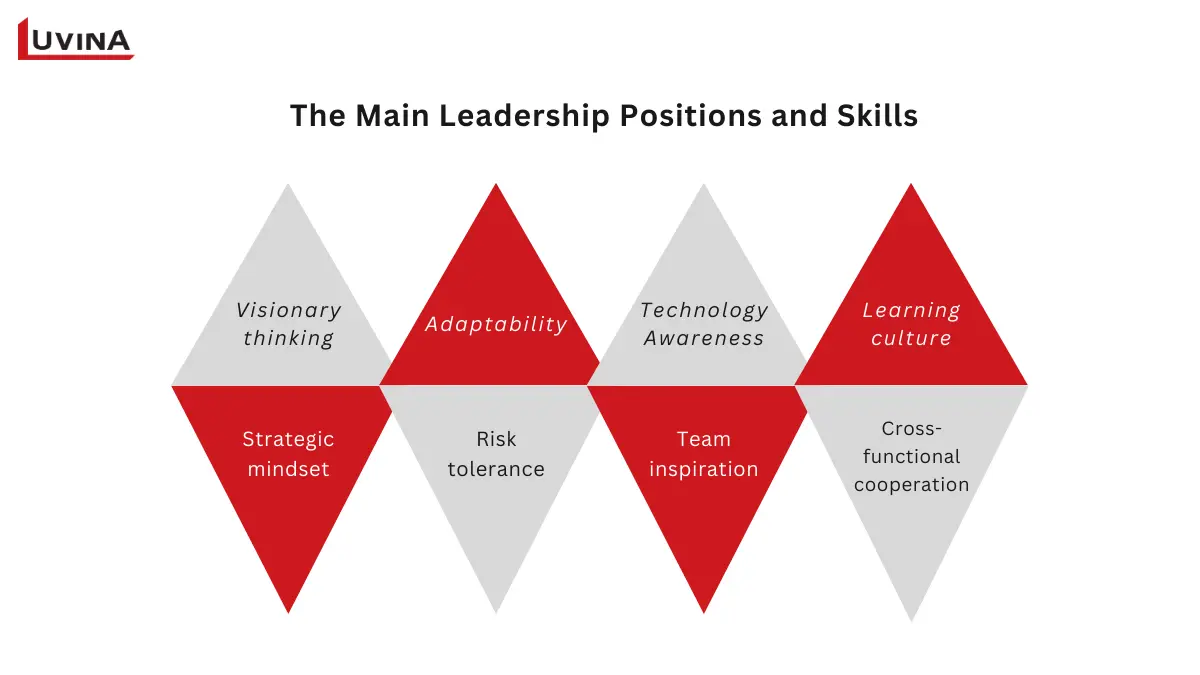
Change management requires leaders with the right qualities
– Visionary thinking: Recognize how digital technologies can transform the company and clearly convey their possibilities.
– Strategic mindset: Match digital efforts with general business plan and long-term objectives.
– Adaptability: Remain adaptable by remaining receptive to new technologies, market changes, and current digital trends.
– Risk tolerance: Encourage experimentation and view failures as chances for learning and growth.
– Technology awareness: Stay current on developing technologies and convert knowledge into practical projects by means of awareness.
-Team inspiration: Motivate workers to participate in change by clearly communicating the vision of transformation.
– Learning culture: Support training courses designed to build both digital and soft skills all around the company.
– Cross-functional cooperation: Build cross-department teams to break down silos.
Building an Operating Model for Continuous Transformation
Managing digital transformation calls for a system clearly specifying how teams, technologies, and processes collaborate to generate value in a digital-first setting. Unlike conventional operating models, which give speed, flexibility, and customer experience priority over efficiency and scale, digital operating models
The plan for how an organization arranges resources, skills, and decision-making is provided by a well-designed operating model. It fosters innovation and new digital services while assisting companies in reacting more quickly to market developments.
An effective operating model for managing digital transformation usually has the following attributes:
– Customer-centric structure: Arrange teams and procedures around customer paths instead of inside divisions.
– Agile decision-Making: Speed decisions by means of decentralized authority and quicker iterative cycles.
– Data-driven operations: Real-time data insights inform operational changes and business decisions driven by data.
– Platform-based architecture: Construct reusable digital capabilities that foster quicker development and innovation based on a platform.
– Ecosystem cooperation: Increase capacity by means of flawless integration with partners, systems, and outside services.
The operating model takes on ever more strategic value as companies grow data-driven, cloud-enabled, and customer-centric. It clarifies how businesses continuously adjust to emerging technical and market realities, produce value, and offer digital experiences.
Managing Organizational Change and Culture Shift
Only the adoption of technology cannot assure a great change. The actual difficulty is leading human and corporate conduct through transformation. This is why effectively managing digital transformation needs a lot of emphasis on culture, communication, and employee competence. Without cultural fit, even the most cutting-edge technologies may not provide any commercial benefit.
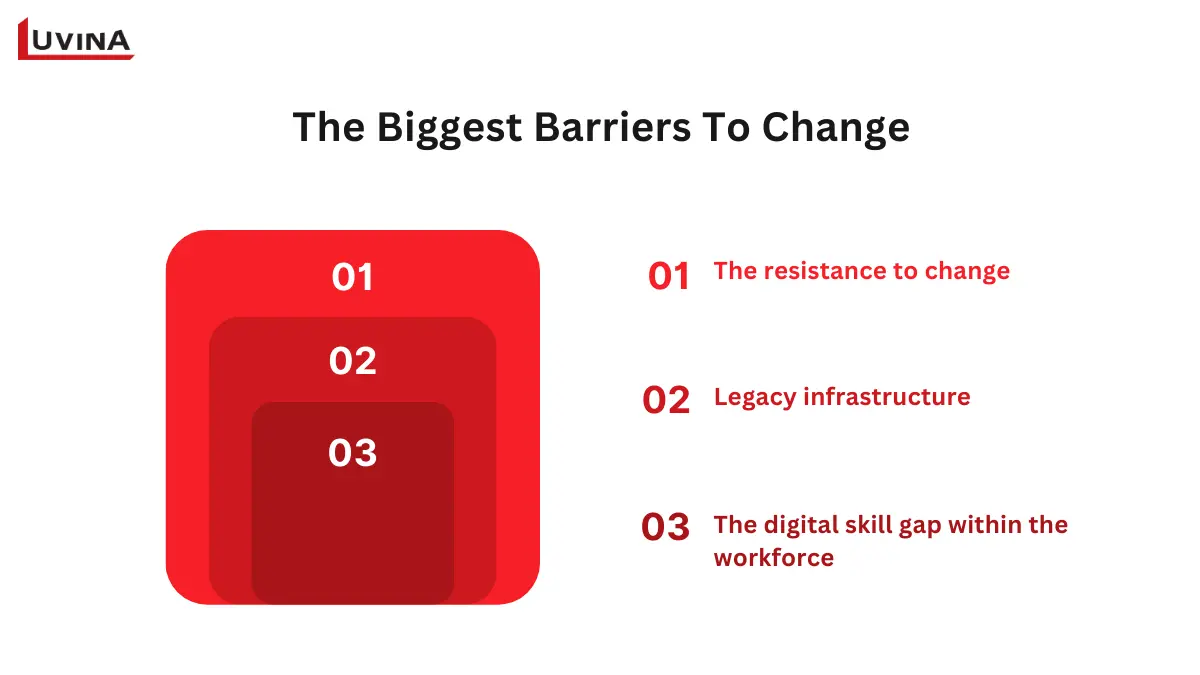
The biggest barriers businesses face on their digital transformation journey
The resistance to change
Introduction of new systems or processes can sometimes leave people unsure. By encouraging open communication and explicitly outlining the advantages of change, groups should solve this. Involving workers in debates and decisions when carrying out a management digital transformation plan fosters trust and mutual dedication.
The digital skill gap within the workforce
Many workers could lack the technical or analytic ability to function in a digital world. Firms must spend on training programs that assist staff in honing adaptive thinking abilities as well as technical competence. Managing digital transformation well over the long run depends on upskilling projects.
Legacy infrastructure
Legacy systems can create barriers to change and hinder innovation. Organizations need to gradually modernize or replace legacy technologies while maintaining business continuity throughout the transition. Infrastructure modernization supports more efficient execution of managing digital transformation due to increased ability to integrate with new platforms and applications through a more streamlined method.
At the same time, companies also need to actively manage technical debt – the accumulation of quick fixes, outdated code, and temporary workarounds created during years of system development. While these shortcuts may help deliver solutions faster in the short term, they often increase long-term maintenance costs, reduce system performance, and make future upgrades more complex. If not addressed, technical debt can slow down innovation and limit the organization’s ability to adopt new digital capabilities.
Technology Governance and Investment Prioritization
To manage digital transformation effectively, organizations must balance technology adoption with strategic planning and resource allocation. Good governance guarantees that innovation initiatives are properly managed, quantifiable, and directly related to company results. When implementing digital transformation management, investment prioritization helps businesses concentrate resources on projects with the greatest strategic influence.
Technology governance
Technology governance makes sure that rather than acting as independent IT initiatives, technology expenditures immediately benefit the company’s strategy. Modern governance approaches stress flexibility, cooperation, and quick reaction to change over stiff control systems.
Among the top objectives are performance monitoring, strategic alignment, risk management, value delivery, and executive involvement, which help to keep technology choices aligned with long-term company objectives. Good administration helps to improve the management of digital transformation implementation across departments.
Also, companies need clear policies to control how AI systems are developed, trained, and deployed. This includes ensuring responsible data usage, maintaining model transparency, and monitoring algorithm performance to avoid risks such as biased outcomes or unreliable automated decisions.
Effective AI governance also requires defined accountability and continuous oversight. Organizations should establish review processes for AI initiatives, ensure regulatory compliance, and regularly evaluate model performance after deployment.
Investment prioritization
Since transformation funds are finite, organizations have to give priority to high-impact projects. Investment prioritization assists in assessing digital initiatives based on their strategic significance and projected commercial value.
Tools like RICE scoring assist in evaluating projects depending on reach, effect, confidence, and effort. For managing digital transformation, balancing operational efficiency initiatives and innovation investments, portfolio-level management works well.
Implementation approach
Governance systems like ISO/IEC 38500 or COBIT will help to increase policy control and consistency of decisions. Maturity advancement from legacy modernization to sophisticated digital capability development should be guided by a straightforward digital roadmap.
Clear decision authority and accountability are vital for effective management of digital transformation throughout the company.
KPIs and Metrics to Measure Transformation Success
Visible progress results from clear KPIs, which also aid data-driven choices in carrying out and managing digital transformation plans. Organisations monitor production cycle time, defect rate, and equipment use to assess operational improvements in fields like digital transformation in manufacturing, for example. Common indicators used to monitor digital transformation performance are shown in the table that follows.
| Metric category | Example KPIs |
| Business performance | Revenue growth, ROI, and market expansion |
| User experience | Satisfaction score, response time, and retention rate |
| Operational efficiency | Process cycle time, automation rate, and cost reduction |
| Workforce productivity | Engagement level, onboarding speed, and task completion time |
| Digital adoption and user acceptance | Platform usage rate, user adoption rate, feature utilization, and employee feedback on system usability |
Metrics to measure the success of a managing digital transformation strategy
Faster iteration and improved user need alignment made possible by agile techniques and human-centered design also help to measure efficacy. Organizations use data analysis tools to follow operational performance, consumer behavior, and market trends. These ideas help to strengthen decision-making and enhance long-term results in managing digital transformation.
Common Management Mistakes (and How to Avoid Them)
Treating change as a fast project rather than a long-term journey is a blunder many businesses make. Avoiding often seen management mistakes is critical to raising success rates and guaranteeing sustained digital adoption when carrying out and managing digital transformation projects.
Seven common management blunders and workable solutions are summarized in the table below.
| Mistake | How to avoid? |
| Lack of a phased transformation strategy | Break transformation into clear stages with milestones and cross-department alignment. |
| Limiting change to one department | Treat transformation as a company-wide initiative with leadership and workforce training. |
| Rushing implementation | Conduct cross-functional requirement reviews before execution. |
| Technology-first mindset | Focus on business outcomes before selecting tools. |
| Operating in organizational silos | Build cross-team collaboration and appoint transformation champions. |
| Ignoring employee concerns | Implement change management programs and provide continuous communication. |
| Lack of training and adoption support | Provide structured training and designate team-level technology mentors. |
Common mistakes in managing digital change
Digital Transformation as an Ongoing Management Capability
Companies that thrive consider innovation as an integral component of their regular operations, therefore improving customer experience, technology use, and processes. This is why managing digital transformation requires a learning, testing, and time-based adaptation mindset. Companies should continuously evaluate performance and implement modest but significant changes rather than wait for important project milestones.
When Managing Digital Transformation, Focus on These Priorities
– Start with leadership alignment
– Define measurable KPIs early
– Launch pilot initiatives before scaling
– Build cross-functional teams
Technology uptake by itself cannot ensure success if businesses lack the internal ability. Digital transformation intensifies when leaders, staff, and systems advance jointly. Companies looking to speed up their transformation process could think about collaborating with seasoned technology and transformation experts, such as Luvina Software, to improve execution quality and strategic alignment in managing digital transformation.
Don’t let your strategy become another statistic. Partner with Luvina to bridge the gap between vision and reality.
Resources
- https://www.mckinsey.com/capabilities/tech-and-ai/our-insights/getting-digital-transformation-right-in-resource-heavy-industries
- https://www.srh-haarlem-campus.com/news/2022/what-is-digital-transformation-management/
- https://mblm.com/blog/digital-transformation-management-leading-change-in-the-digital-age/
- https://www.mendix.com/blog/why-do-digital-transformations-fail/#change-your-focus-to-change-your-outcome
- https://community.hpe.com/t5/the-cloud-experience-everywhere/the-operating-model-is-the-key-to-the-digital-transformation/ba-p/7156428?nobounce
- https://www.forbes.com/councils/forbesbusinesscouncil/2025/04/01/18-common-mistakes-companies-make-when-managing-digital-transformation/
READY TO START A PROJECT?
Our experts are eager to explore your needs.


Read More From Us?
Sign up for our newsletter
Read More From Us?
Sign up for our newsletter