




The IT Landscape in the First Half of 2026: 5 Trends Reshaping Business


The first half of 2026 marked a major turning point for the technology industry. Technology is no longer just a tool for improving operations. It has become a core driver of business strategy and long-term growth. At the same time, the digital landscape is being reshaped by autonomous AI, modern data management, and increasingly complex cybersecurity challenges.
Based on insights from leading industry reports, Luvina has identified five key technology trends and the business impact that every B2B leader should understand today.
1. The Shift from Generative AI to Agentic AI
Over the past two years, AI adoption has largely focused on chatbots and content generation tools. In 2026, the focus has shifted to AI agents. These systems can plan tasks, use external tools, and complete complex workflows with minimal human involvement.
According to Gartner’s 2026 CIO and Technology Executive Survey, only 17% of organizations have already deployed AI agents. However, more than 60% plan to do so within the next two years. This represents the fastest expected adoption rate among all emerging technologies surveyed. At the same time, most current deployments remain limited in scope. Fully autonomous AI agents are still not ready for many real-world business scenarios.
Businesses must stop thinking of AI as a prompt-based tool that simply responds to commands. Instead, AI should be viewed as a digital workforce capable of taking action. This shift requires organizations to redesign their governance models. Drawing on our strategic consulting experience, Luvina strongly recommends that B2B clients establish strict control mechanisms to oversee automated decisions made by AI Agents, preventing risks such as unauthorized contract approvals or incorrect business transactions.
2. The Rise of AI Native Software Development
As AI agents become more capable, software development is also undergoing a fundamental transformation.
Gartner identifies AI native development as one of the industry’s leading trends. It accelerates innovation and has the potential to replace many traditional SaaS platforms. IDC adds that more than 60% of large IT outsourcing companies across Asia Pacific have already adopted AI-augmented teams. This approach has reduced software development and testing time by 30% to 40%.
When choosing a technology partner, the key question is no longer how many developers they have. Instead, ask how they use AI to strengthen their engineering teams. This is one reason why Luvina has become a trusted technology partner. By adopting the AI-augmented team model early, Luvina helps clients accelerate delivery while optimizing development costs. If your technology partner still relies entirely on manual coding, you may be paying for unnecessary delays.
3. Data Cleansing: The Foundation Every AI Strategy Needs
The first half of 2026 also saw a significant shift in IT investment toward data cleansing services and modern data platforms such as Databricks and Snowflake.
Business leaders are realizing a simple truth. AI is only as intelligent as the data it receives. Today, 64% of organizations identify data quality as their biggest data integrity challenge. Meanwhile, 77% rate their internal data quality as average or poor. Without clean data, automation simply allows mistakes to spread faster.
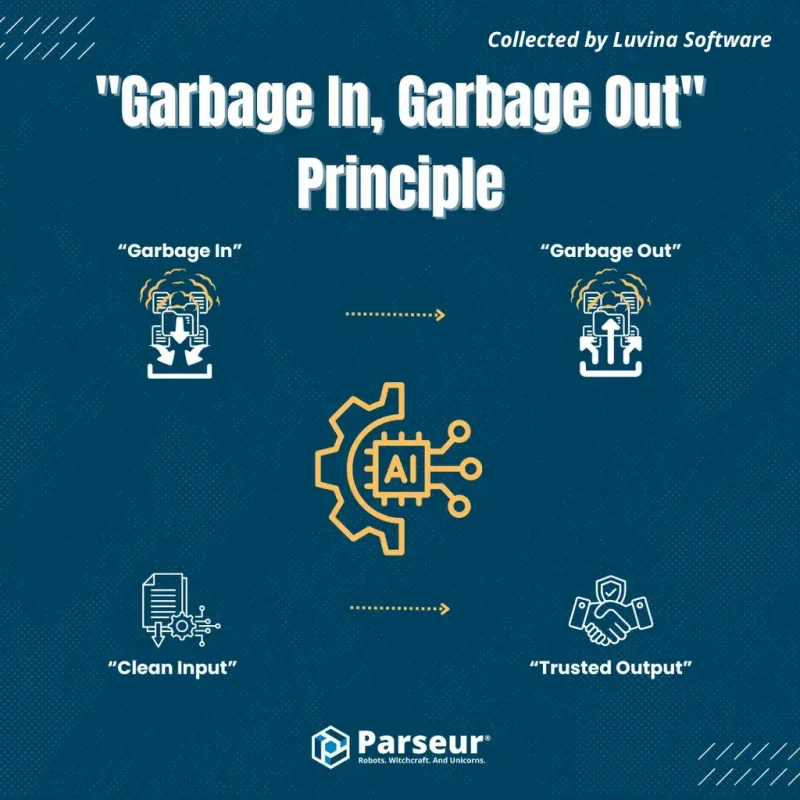
Before approving multimillion-dollar AI initiatives, organizations should first invest in data cleansing and modern Data Lakehouse architectures. Clean, reliable data is the foundation for successful AI adoption and long-term business value.
4. Cybersecurity: AI Agents Create a New Risk Frontier
As AI agents gain permission to perform business tasks, they also introduce an entirely new attack surface that traditional security systems were never designed to protect.
According to a Dark Reading reader survey, 48% of cybersecurity professionals consider AI agents and autonomous systems to be the leading attack vector in 2026, ranking even higher than deepfake threats. The challenge is that every AI agent introduces a non-human identity that requires secure machine-to-machine authentication. Most enterprise identity management systems are not prepared for this new reality.
Cybersecurity is no longer only an IT responsibility. It has become a business-wide priority. Organizations must establish clear AI privilege management policies. This is also a core security principle that Luvina incorporates into every project delivered to its clients. It ensures that AI is never granted access to critical business data without final human approval through a Human in the Loop mechanism.
5. Global IT Spending Surpasses USD 6 Trillion for the First Time
Technology investment continued to accelerate throughout the first half of 2026 despite ongoing discussions about a possible AI bubble.
According to Gartner, worldwide IT spending is forecast to reach USD 6.31 trillion in 2026, representing a 13.5% increase compared with the previous year. Investment continues to flow into technologies that support AI adoption and digital transformation.
Table: Gartner’s 2026 Worldwide IT Spending Growth Forecast by Segment
| Investment Segment | Growth Rate | Key Driver |
| Data Centers | 55.8% | Major technology companies are rapidly purchasing AI accelerator chips and advanced memory modules to upgrade their infrastructure. |
| Software | 15.1% | Strong demand for software solutions with built in Generative AI capabilities. |
| IT Services | Largest spending category | Reaches USD 1.87 trillion as organizations increasingly outsource complex Cloud and AI implementations. |
| Hardware Devices | 8.2% | Growth is constrained by record high memory component prices, extending device replacement cycles. |
| Telecommunications Services | 4.8% | Steady growth driven by the need to maintain core network connectivity. |
Source: Gartner (April 2026)
The fact that IT services remain in the largest investment category highlights an important reality. Today’s cloud and AI environments have become too complex for many internal IT teams to manage alone. Working with experienced technology partners is increasingly the most practical way to control costs, reduce implementation risks, and accelerate digital transformation.
Final Thoughts
The technologies shaping the first half of 2026 all point to the same conclusion: AI is no longer a standalone innovation; it is becoming the foundation of how modern businesses operate. However, realizing its full value requires more than adopting new tools. Organizations need trusted data, modern software engineering practices, robust governance, and security built for an AI-driven future.
For business leaders, the challenge is no longer deciding whether to invest in AI but determining where it can create the greatest business impact and how to implement it responsibly.
At Luvina, we partner with organizations to build and modernize enterprise software, accelerate AI adoption, and deliver reliable engineering solutions that create long-term business value. By combining Japanese-quality engineering with AI-augmented delivery, we help businesses move from emerging technology to real-world results.
Resources
- https://www.gartner.com/en/articles/hype-cycle-for-agentic-ai
- https://www.deloitte.com/us/en/insights/industry/technology/technology-media-telecom-outlooks/software-industry-outlook.html
- https://www.gartner.com/en/documents/7046398
- https://parseur.com/blog/gigo
- https://aiautomationglobal.com/blog/ai-agent-security-identity-crisis-enterprise-2026
- https://www.kiteworks.com/cybersecurity-risk-management/agentic-ai-attack-surface-enterprise-security-2026
- https://www.gartner.com/en/newsroom/press-releases/2026-04-22-gartner-forecasts-worldwide-it-spending-to-grow-13-point-5-percent-in-2026-totaling-6-point-31-trillion-dollars
READY TO START A PROJECT?
Our experts are eager to explore your needs.

Read More From Us?
Sign up for our newsletter
Read More From Us?
Sign up for our newsletter